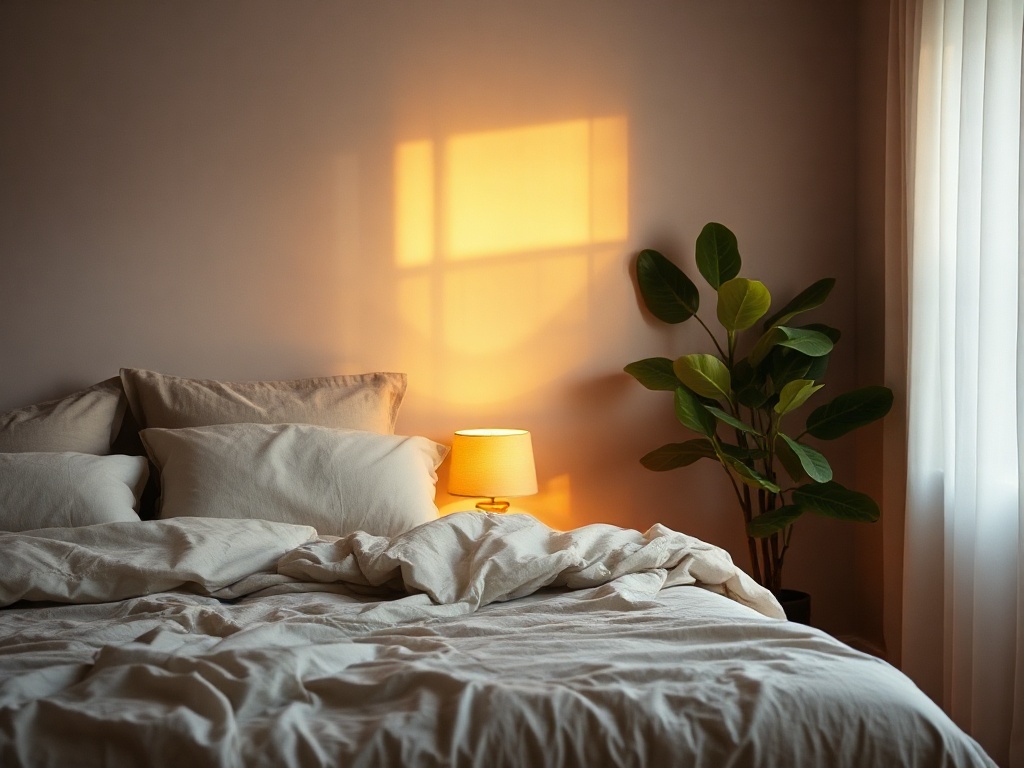
Designing a Bedroom That Actually Restores You
The average American spends about six years of their life sleeping. Most of us have never taken a single course on the environment in which we do it.
Your bedroom is the room where your nervous system is supposed to transition from alert to restored. But most bedrooms are designed for everything except that. Work bleeds in through a laptop on the dresser. Blue light from a TV floods the room until you fall asleep. Clothes live on chairs. The ceiling is painted the same color as the walls in the living room.
None of this is malicious. It's just that "bedroom" and "rest" weren't designed together — they were combined by default.
This is a guide to taking them back apart and putting them together properly.
The First Principle: Your Room Should Signal One Thing
Your nervous system reads cues. When you enter a room, your brain asks: what is this space for? If the answer is "work, storage, TV, three different activities," your cortisol levels stay elevated. If the answer is "rest," your body begins the process of parasympathetic activation — the switch from doing to restoring.
The single most important design decision for a restore-quality bedroom is this: remove every cue that doesn't reinforce rest.
That means no work materials visible. No exercise equipment. No clothing on chairs. No screens that don't go fully dark at night. The room should say one thing, clearly: this is where we rest here.
The Second Principle: Light Is the Most Powerful Tool
The research is unambiguous: the light environment in your bedroom directly determines the quality of your sleep. Specifically:
In the evening, warm light (below 3000K color temperature) preserves melatonin production. Cool, blue-spectrum light — the kind emitted by phones, tablets, and overhead LEDs — suppresses it. Switching your overhead bulbs to warm-toned alternatives (or turning them off entirely after sundown) is a one-evening change with documented sleep quality improvements.
In the morning, bright, cool light signals your circadian system to wake. Opening curtains or using a light-therapy lamp in the first 15 minutes after waking has been shown to improve daytime alertness and reduce the grogginess that comes from a misaligned circadian rhythm.
The practical fix: Replace overhead bedroom lights with warm-toned bulbs (2700K-3000K). Add a small lamp for reading. Consider a sunset lamp as your evening light source — the amber gradient signals the brain to wind down, and it creates a room quality that makes the phone less interesting. In the morning, open the curtains before you do anything else.
The Third Principle: Texture Matters More Than Color
Free Guide
Want the full Sanctuary Starter Guide?
12 intentional swaps for a home that serves you — free PDF, plus our 5-part email series.
No spam. Unsubscribe any time.
You can sleep in a white room or a blue room. You can't sleep well in a room that feels like a hotel or a hospital. What makes a space feel like it belongs to you, and therefore like a place you can actually let go in, is texture.
Natural fibers tell your nervous system: this is a place with organic complexity, like the outdoors, like nature. Your body relaxes more readily in environments that mirror the sensory environment humans evolved in.
Linen bedding is the single highest-impact textile change you can make. Natural linen has a lower thread count than cotton per square inch, which means more air circulation, better temperature regulation, and a texture that improves with every wash. It costs more upfront and lasts longer — the cost-per-year math usually works out favorably.
Beyond the bed: a wool throw blanket on a chair, linen curtains or sheers, a natural fiber rug (jute or wool, not synthetic), wooden furniture with grain visible.
The Fourth Principle: Temperature Is the Most Overlooked Variable
The ideal sleeping temperature is between 65°F and 68°F (18°C-20°C). Most bedrooms in heated homes run too warm. A room at 72°F instead of 66°F can reduce the depth of slow-wave (deep) sleep by up to 20% — meaning you sleep the same number of hours but wake less restored.
The fix isn't always more air conditioning. It's often better bedding. A natural latex or innerspring mattress (avoid all-foam memory foam for temperature regulation) and linen sheets instead of synthetic blends will significantly improve heat dissipation through the night.
Avocado Mattress builds their products with natural latex, organic wool, and innerspring coil systems that allow more airflow than foam-only construction. The result is a mattress that sleeps cool by design rather than requiring active cooling.
The pillow matters too. Synthetic fill retains heat and flattens overnight. A natural pillow — wool-filled, buckwheat hull, or high-quality down — breathes and adjusts to your head shape without overheating.
Silk & Snow Pillow uses a kapok and microfiber blend that mimics down's feel while being fully washable and temperature-regulating.
The Fifth Principle: Keep It Bare
The most underrated design move in bedroom setup is removing things. Not adding them.
A surface with one object reads as intentional. A surface with five objects reads as cluttered. The nervous system registers both and responds accordingly.
Rule of thumb: every surface (nightstand, dresser, floor) should hold no more than one item that is actively used. Everything else is either storage (in a drawer, a closet, a basket) or removed.
This is not minimalism as an aesthetic. It's minimalism as a sleep tool. Your bedroom is a tool for restoration. You are the only user.
What to Do This Week
- Remove all work materials, screens, and exercise equipment from sight.
- Switch bedroom bulbs to warm tones.
- Open the curtains as the first action after waking.
- Add one natural fiber element — linen pillowcase, wool throw, natural rug.
- Lower the thermostat by two degrees before bed.
Small changes, compounding. A bedroom that signals rest is the most underrated health intervention available. It costs less than a supplement, works better than a sleep aid, and compounds in value every night you use it.
Every product linked here was selected for material transparency, temperature regulation, and durability. We only link to things we'd use ourselves.