Why the Hill Country Has Its Own Design Grammar
Ready to design your sanctuary? Start your quote →
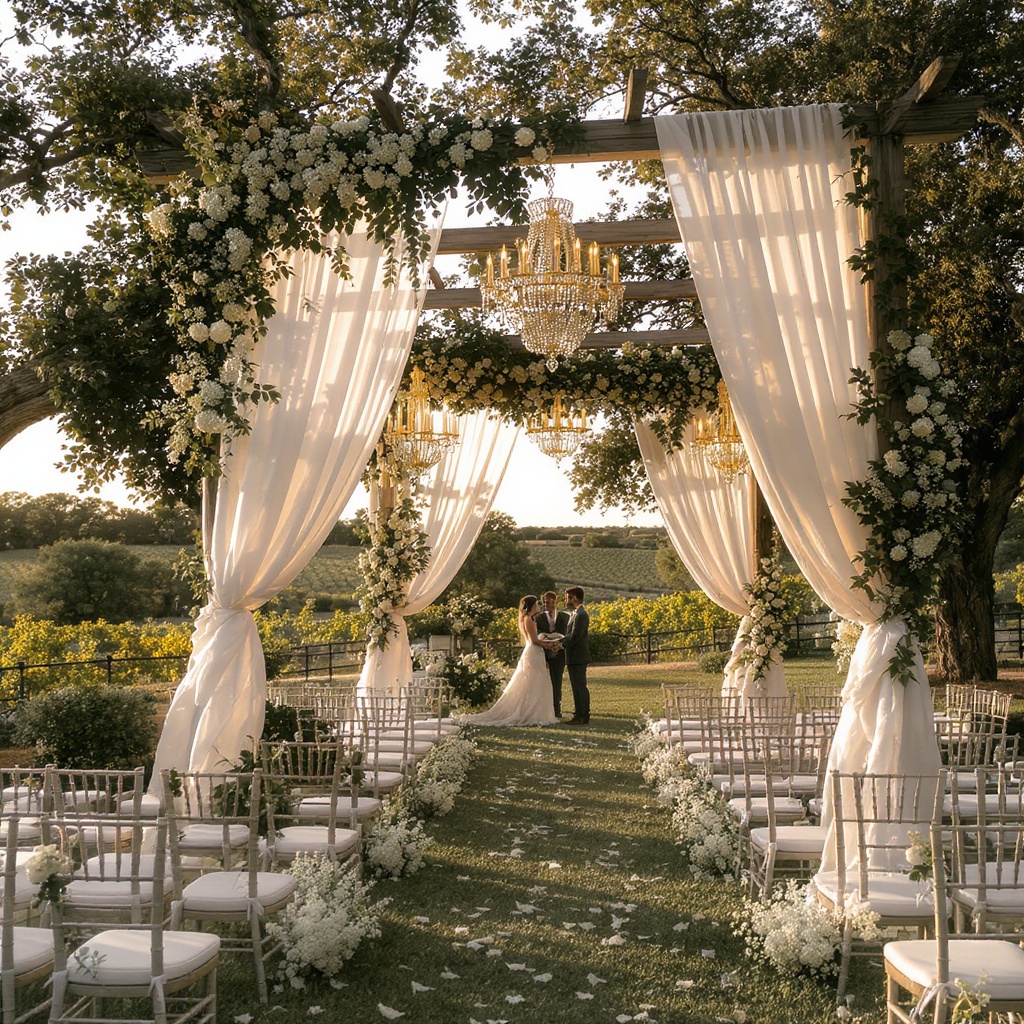
The Hill Country is not a neutral backdrop. The live oaks, the limestone, the way the golden hour moves through the cedar and the oak — it has a texture that is immediately identifiable, and it makes specific demands on your table.
If you set a formal ballroom table in a Hill Country barn, the table fights the space. If you set the right table in the Hill Country, the table and the land are having the same conversation.
The palette is obvious once you see it: sage, cream, and stone. Not by accident — those are the colors of the Hill Country landscape. Here are ten ways to use them.
1. The Limestone Runner
Lay a linear arrangement of flat limestone slabs (available from most stone yards in the Austin area) down the center of your long table. Between the slabs, place pillar candles in ivory cylinders at varying heights. Top with a single stem of dried olive branch or eucalyptus.
The limestone does the visual work so your linen doesn't have to. This works best on tables longer than 12 feet — any shorter and the slabs feel decorative rather than structural.
2. Sage Napkins, Cream Cloths, Stone Chargers
The simplest version of this palette, executed perfectly: cream-colored linen tablecloth, sage silk or linen napkins folded in a simple pocket fold, stone-finish charger plates (most rental companies carry these in the Austin market), and flatware with a matte gold or brushed bronze finish.
The key is restraint. Do not add a sage linen runner on top of sage napkins. Pick one accent layer and let it work.
3. The Evening Light Table
For outdoor Hill Country receptions that run from late afternoon into the evening: use cream linen with gold-accented glassware (not gold flatware — too heavy for outdoor light). Place votives in clear glass cylinders, not colored glass — they will catch and throw the candlelight differently as the sky darkens.
As the sun goes down, this table transforms. It looks one way at 5pm and completely different at 8pm. Plan your photography with this in mind.
4. Farm Table at the Oak Grove
For outdoor ceremonies and receptions under the live oaks at venues like Contigo Ranch or Stone House Ranch: use a bare wood farm table (no tablecloth), cream-colored napkins, and a single bunch of dried wildflowers in a ceramic pitcher as the centerpiece.
This table doesn't try to compete with the oak canopy above it. It steps aside and lets the landscape lead.
5. The Cathedral Table
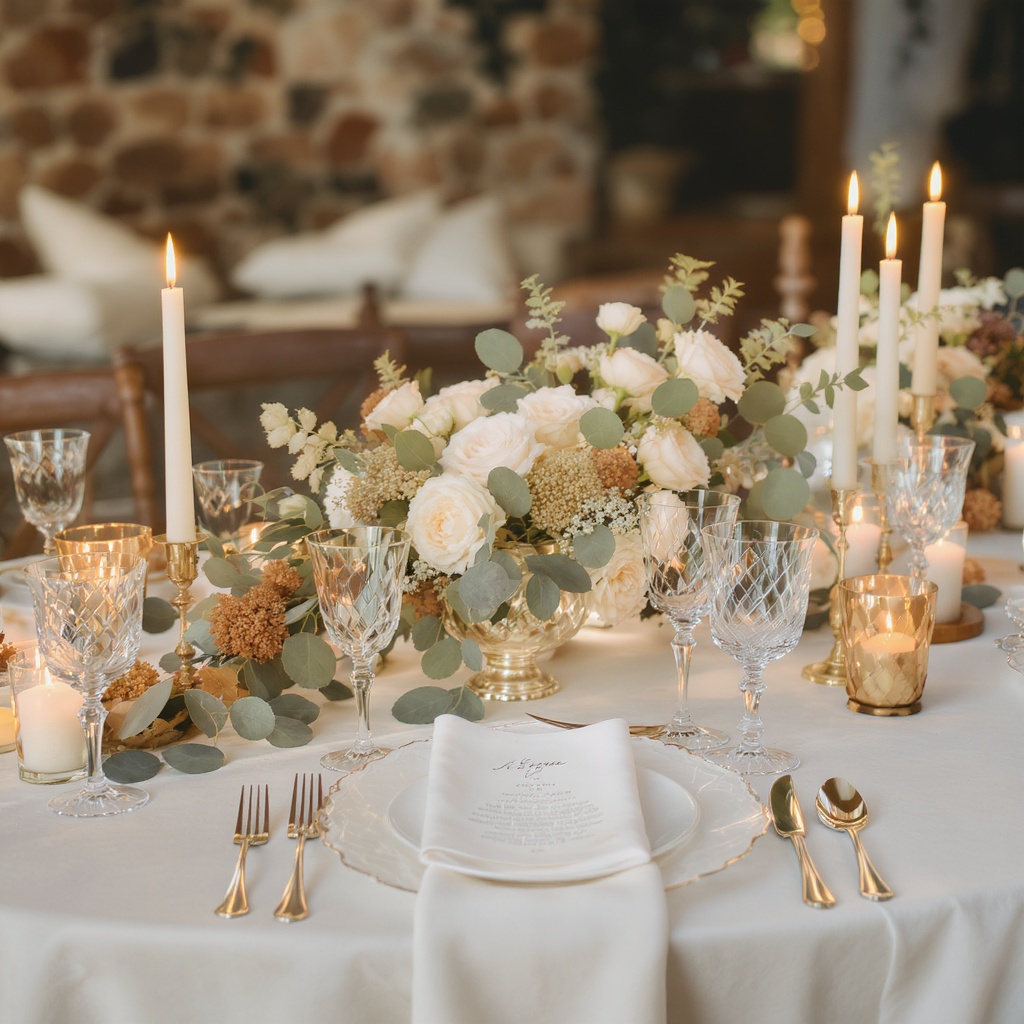
For chapel ceremonies or formal indoor Hill Country venues (Ma Maison, The Milestone in Boerne): ivory floor-length linen, crystal stemware, taper candles in polished brass holders, and a simple arrangement of white roses with olive foliage.
This is the table that belongs in a stone chapel with vaulted rafters. The material honesty — linen, crystal, candlelight — matches the architecture. Do not add color to this table; the stone and the glass and the flame are enough.
6. Round Tables at Camp Lucy
For the Camp Lucy and Dripping Springs crowd: round tables (72" or 84") in ivory linen, sage cloth napkins, and a centerpiece built from a low arrangement of white lisianthus, dusty miller, and olive branch in a low wide ceramic vessel.
Keep the centerpiece below 12 inches so guests can see each other across the table. Hill Country receptions at venues like Camp Lucy are often multi-course; the table needs to work as a dining surface, not just a photograph.
7. The Wine Country Table
For Fredericksburg and Boerne-area venues where the vineyard view is part of the backdrop: cream linen, burgundy-washed napkins (if you are adding color, this is the one place it earns its place), simple bud vases with a single white flower each, and dark wood or slate charger plates.
The burgundy napkin connects the table to the wine country landscape without competing with the view. This is the table you serve a Hill Country wine paired dinner on.
8. The Cedar and Stone Moment
For venues near Wimberley and Dripping Springs where the cedar and limestone are the dominant visual elements: sage linen on the tables, with small bundles of dried cedar sprigs at each place setting as a favor guests take home.
The table is giving something away. That generosity — cedar in the hand, carried home — is the Hill Country in miniature.
9. The Evening Reception at the Barn
For covered barn venues in the Hill Country: cream linen with a subtle texture (not a solid — a texture reads differently in barn light), matte black flatware (strong contrast, works beautifully against cream), clear glass votives in clusters of three, and tall arrangements of dried grasses in cylinder vases down the center of the table.
The dried grasses read as intentional in a way that fresh flowers sometimes don't in a barn. The dried material connects to the building's own texture.
10. The Grand Finale: Stone, Crystal, and Candlelight at Dusk
For 150+ guest receptions at larger Hill Country venues: ivory floor-length linen, stone-finish charger plates, crystal stemware, and taper candles at 24" height in polished brass stands down the center of the table.
This is the table that makes a Hill Country wedding feel like a destination. At dusk, with the votives lit and the tapers burning, this table is the image. Everything else in the venue — the stone walls, the oak trees, the first stars — is supporting the cast.
How to Make This Happen
All ten of these tables are achievable with rental inventory available through the Austin and San Antonio market. The key is working with a stylist who understands the Hill Country landscape — not just the design trend — and who can source linens, tabletop, and crystal that reads honestly in outdoor and natural light.
Start a quote → and tell us about your venue. We will show you what the table looks like in your space, at your guest count, in your season.