Most Wedding Checklists Start in the Wrong Place
Ready to design your sanctuary? Start your quote →
They tell you to book the venue first. Reserve the photographer. Send the save-the-date. And all of that matters — but none of it is where you actually begin.
If you are planning a wedding that reflects something true about your faith, there are items that don't show up on most planning lists. Things that, if overlooked, show up as regrets — sometimes years later.
This checklist is for you: the bride who is planning with prayer in one hand and a spreadsheet in the other.
The 12 Things Most Brides Forget
1. Decide What Your Ceremony Will Actually Feel Like
Not the style. Not the color palette. The feeling. Who is officiating? What language do you want to hear in your vows? Is your ceremony going to be liturgical, contemporary, or something you write yourselves? Have you talked through this with your partner — not once, but as a real ongoing conversation?
Most brides plan the reception in granular detail and leave the ceremony to "we will figure it out." Austin venues and Hill Country venues both have chapel spaces worth touring specifically for this conversation.
2. Choose Your Officiant Before You Choose Your Venue
This is backwards from how most brides approach it. Your officiant sets the tone for your ceremony — and the ceremony venue needs to work with your officiant's requirements (available setup time, acoustics, what they need from a sound system, any restrictions on photography).
Some officiants only work within certain faith traditions and building types. Know this before you've signed a venue contract.
3. Plan a Processional That Reflects Your Faith Story
The processional is one of the most photographed moments of the day — and also one of the most theologically loaded. Who walks? In what order? To which song? With what meaning?
If you are being given away, what does that actually mean to you and your father? If your parents are divorced and both walk you, how does that reflect your family's story? If you have a bridal party, what does it mean for them to witness this covenant alongside you?
These questions don't have wrong answers. They just need to be asked.
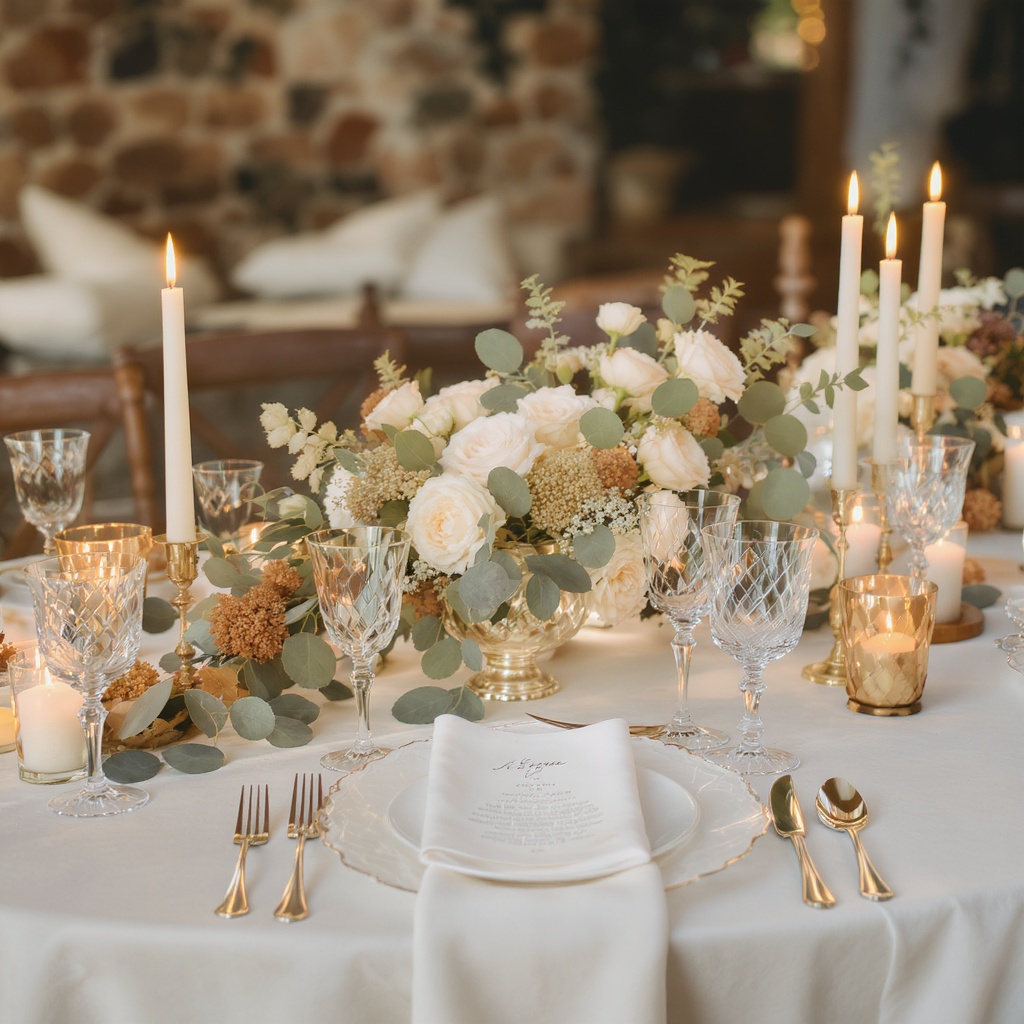
4. Decide How You Want the Table to Speak
This one is personal to us — but we believe every bride who cares about her faith should think through it deliberately: what does your table say?
Revelation 19:8 describes fine linen as "the righteousness of the saints." Whether you read that literally or metaphorically, it points to something real: the table is not background. It is part of the language of your day.
What color linen speaks to your aesthetic? What does candlelight communicate in your space? Hill Country barn weddings and Austin ballrooms both have distinct visual grammars — the table should fit both the architecture and the story.
5. Assign a Person, Not a Role, for Day-of Setup Supervision
"Someone will handle it" is not a plan. Before you sign any rental contract, know specifically who is responsible for supervising the table setup and breakdown on your wedding day.
If your venue coordinator is doing it: confirm in writing. If your planner is doing it: confirm in writing. If the rental company handles it: confirm the arrival time and who receives the final inspection.
The table you envisioned only exists if someone is watching it be built.
6. Write Your Vows Before the Deadline, Not On It
This is the item most likely to sneak up on you. Most couples plan to write their vows the week before the wedding. Most couples who plan their vows the week before the wedding are less satisfied with them than couples who started months earlier.
If you are writing your own vows, put a date on your calendar now: six weeks out. Not "start thinking about it." Write them.
7. Plan for the Children in the Room
Not all weddings include children — but if yours does, this matters: who is watching them during the ceremony? What happens if a child is loudly disruptive at the most solemn moment of your day?
San Antonio garden estates and Hill Country outdoor venues often have families with children in attendance. Having a plan is not a luxury; it is a kindness to everyone involved.
8. Discuss Your Photography Priorities Before the Engagement Session
Most brides do an engagement session months before the wedding without having the conversation about what they actually care about in wedding photography. The result: a portfolio of beautiful photos that don't feel like them.
Have the conversation. What matters: the dance floor? The first look? The detail shots? The candlelight? Give your photographer a ranked list of three to five moments that are non-negotiable.
9. Assign Someone to Manage Guest Experience, Not Just Timeline
The timeline is the coordinator's job. But who is thinking about whether your grandmother can see the ceremony from her seat? Whether the bar line is too long? Whether the temperature in the reception tent is comfortable?
One person, assigned before the week of the wedding, whose job is to notice the experience and make it better in real time.
10. Create a Plan for What Happens After the Last Song
This one is almost never on checklists — and it should be. Where do you go after the last song? Who drives you to the exit? Is there a sendoff planned? Is your family staying at the venue for breakdown?
The "after" matters. The end of your wedding day will be a memory you carry, and it should be as considered as the beginning.
11. Send a Day-of Schedule to Your Parents and VIPs the Week Before
Not the full timeline. Not the 47-page run-of-show. Just a one-page summary: when to arrive, where to go, what the dress code means, and who to call with a problem.
Most family drama at weddings comes from unclear communication. One page, sent the week before, prevents most of it.
12. Write Your Thank-You Notes Before the Honeymoon
This is not a suggestion. It is a rule. The reason: right after your wedding, you are still in the experience. You remember exactly who gave you what and what it meant. Six months later, you are writing "thank you for the beautiful gift" and you have no idea which gift you are thanking them for.
Set aside thirty minutes on a specific day in the week after your wedding and write them all. Then go on your honeymoon with a clear conscience.
Ready to Design a Table That Matches Your Story?
Every item on this list is about one thing: making decisions on purpose, rather than by default. The table is no different.
Start your quote → and tell us about your event. We will build something that holds the weight of the occasion.